The 45-Second Rule: How We Build Instant Response Into Busy Schedules
You cannot staff a phone 24/7. You shouldn’t have to. The fix isn’t “be more available” — it’s building a system that responds the moment a lead reaches out, regardless of whether a human is free to see it yet. We call it the 45-Second Rule: no inbound lead should sit unacknowledged longer than 45 seconds.
The Problem: Availability Isn’t the Bottleneck
Most fixes people try first are availability fixes — hire an answering service, check the phone more, set a reminder. All of these still depend on a human being free at the exact moment a lead reaches out, which is exactly the thing solo operators and small teams don’t reliably have.
Why It Happens
Every inbound channel — forms, texts, DMs — usually routes into whatever inbox or phone is closest at hand, with no system watching for urgency. That’s a routing problem, not a people problem, and it’s solvable without adding headcount.
What It’s Costing You
None of this requires a new website or a rebuilt brand. It requires funnel tracking tight enough to know exactly where a lead is at every second, and automation built to close the gap between “they reached out” and “someone responded” — without asking you to be superhuman. Businesses that consistently win high-intent leads aren’t the ones with the flashiest ads. They’re the ones whose traffic actually converts because nothing goes quiet after the click.
The Fix
Here’s how the 45-Second Rule actually gets built:
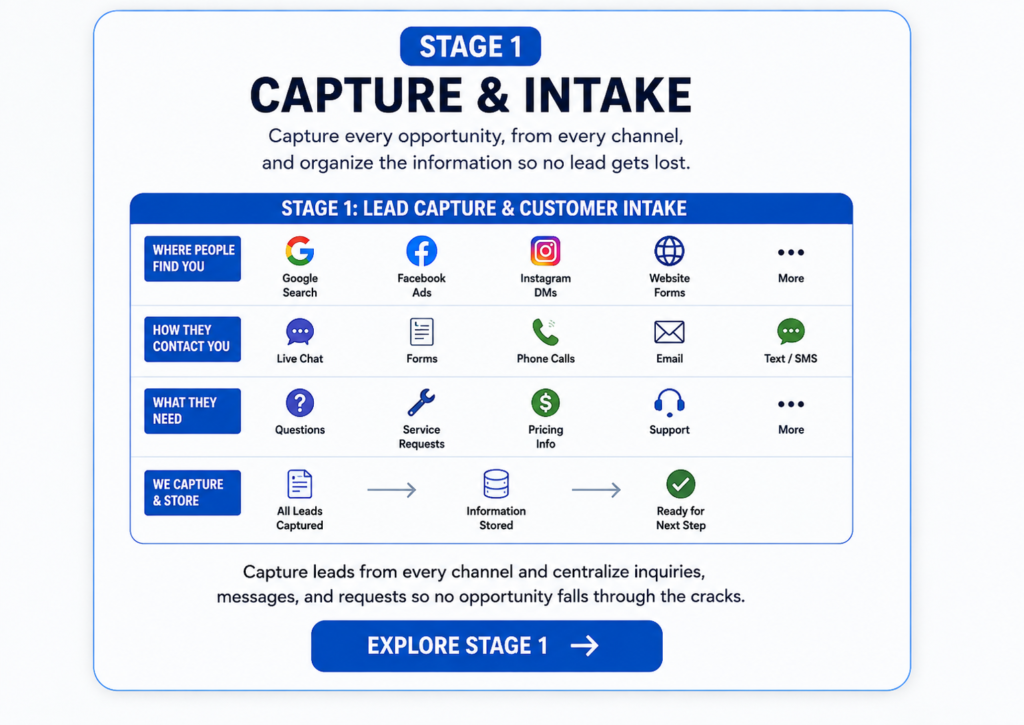
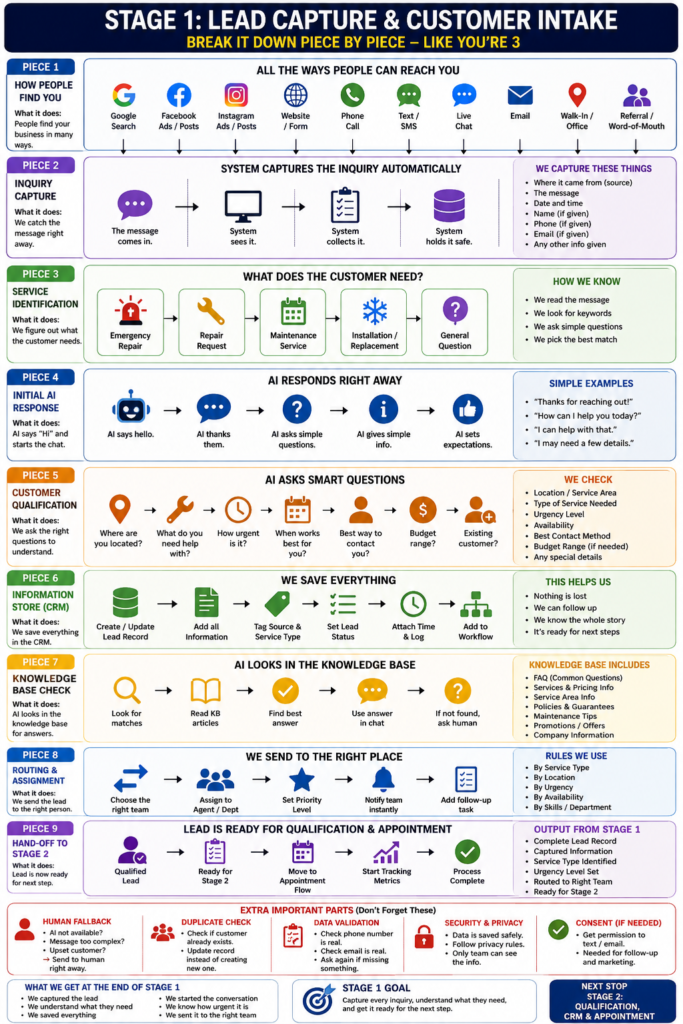
1. Instant Capture. Every form, text, and DM routes into one system the second it lands — not a shared inbox, not a personal phone buried under fifty other notifications.
2. Immediate Human-Sounding Reply. Within seconds, the prospect gets a warm, specific acknowledgment — not a robotic auto-reply. It buys the hours you need without leaving them wondering if anyone’s home.
3. Escalation If No Human Follows Up. If a lead doesn’t get a real human touch within your set window, it escalates — a second nudge, a reroute, a flag — so nothing sits silently until it’s cold.
What To Do Next
You don’t need to be available 24/7. You need a system that is. Map your current response times this week and see how far you are from 45 seconds.
The leak is there. The question is how long you let it run.